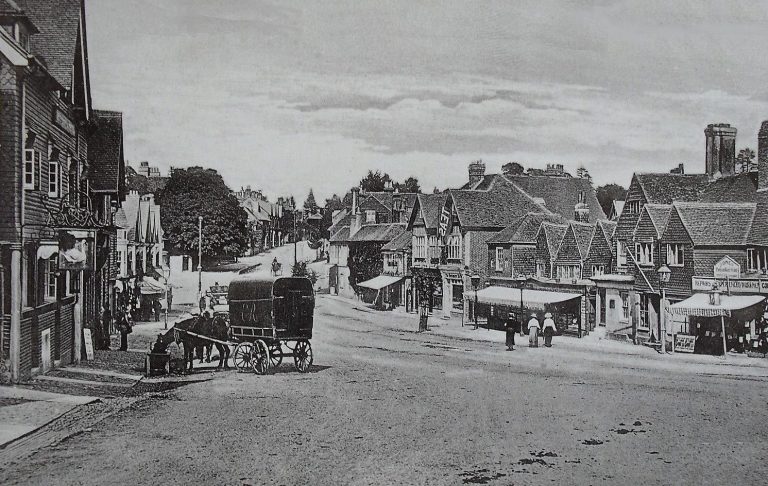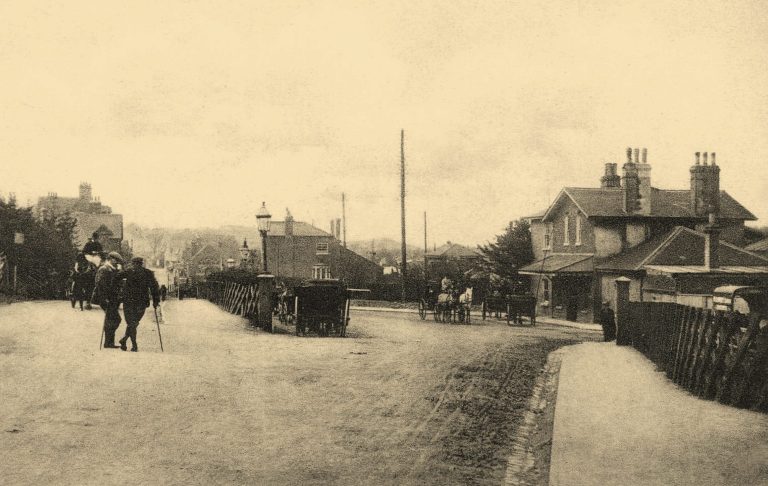
Historic Haslemere
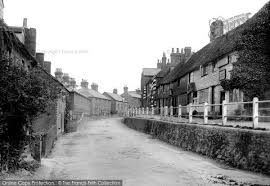
it would be overstating it to say Haslemere holds historic national significance - but its proximity to London and Portsmouth certainly makes it far from an anonymous small town.
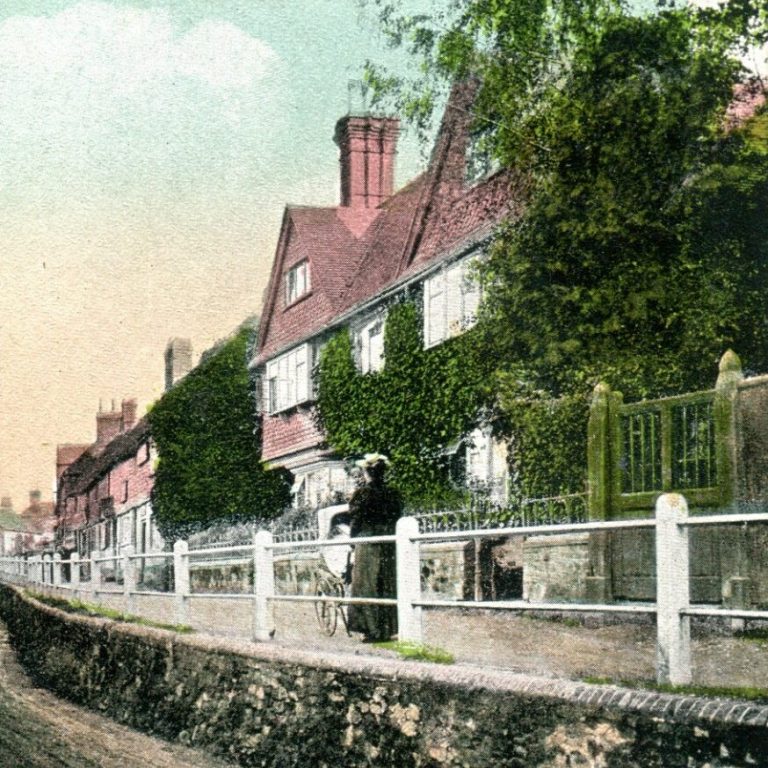
And in its own way, Anchor Cottage has been a part of that story.
Early days
Haslemere began life as a small planned market town on the Surrey, Hampshire and Sussex borders, its name recalling the “hazel-tree lake” that once lay at the southern end of the High Street. In 1221 Henry III granted a market charter, and later a fair, to encourage settlement in this wooded corner of the Weald.
The town was laid out with a long, straight High Street lined by narrow burgage plots—houses and workshops at the front, gardens, orchards and yards stretching far back—giving as many traders as possible direct access to the street.
Although Haslemere never rivalled Guildford or Farnham in size, its strategic position on the London to Portsmouth route ensured steady custom. Timber and woodland produce from the surrounding hills supported local livelihoods, while St Bartholomew’s Church, first mentioned in the 13th century, provided the community’s spiritual anchor. By Elizabethan times, 1584 to be precise, the town won the unusual distinction of sending two MPs to Parliament, even though its population was still tiny.
In character, Haslemere remained more a modest market borough than a bustling town, yet its planned medieval foundations and continuing political voice gave it a distinctive identity that endured into the modern age.
1611
1611 finds the first reference to Anchor Cottage in the records, although the story begins in 1584, in the very year Haslemere received its Charter from Queen Elizabeth the 1st.
'In this area, known as Pyle Well, in 1584, William Pearson, yeoman of London left by will to a Mr Blackwell and his three sons (Lord of the Manor of Sydinghurst) all rights in a house and lands called Pyle Well House (now number 68).
In 1603, 'Thomas Billinghurst was admitted at Godalming Manor Court to a parcel of land adjoining his house in Haslemere'.
In 1611, Thomas Billinghurst set up a trust, which refers to three houses on his land at Pyle Well; one, Pyle Well House, occupied by himself, one by Robert his younger son and the third by Robert Aylwin in trust, to devolve on his death to his son John Billinghurst.
In this same year Thomas Billinghurst died and bequeathed to his son Robert the newly erected house, built by him (Thomas).
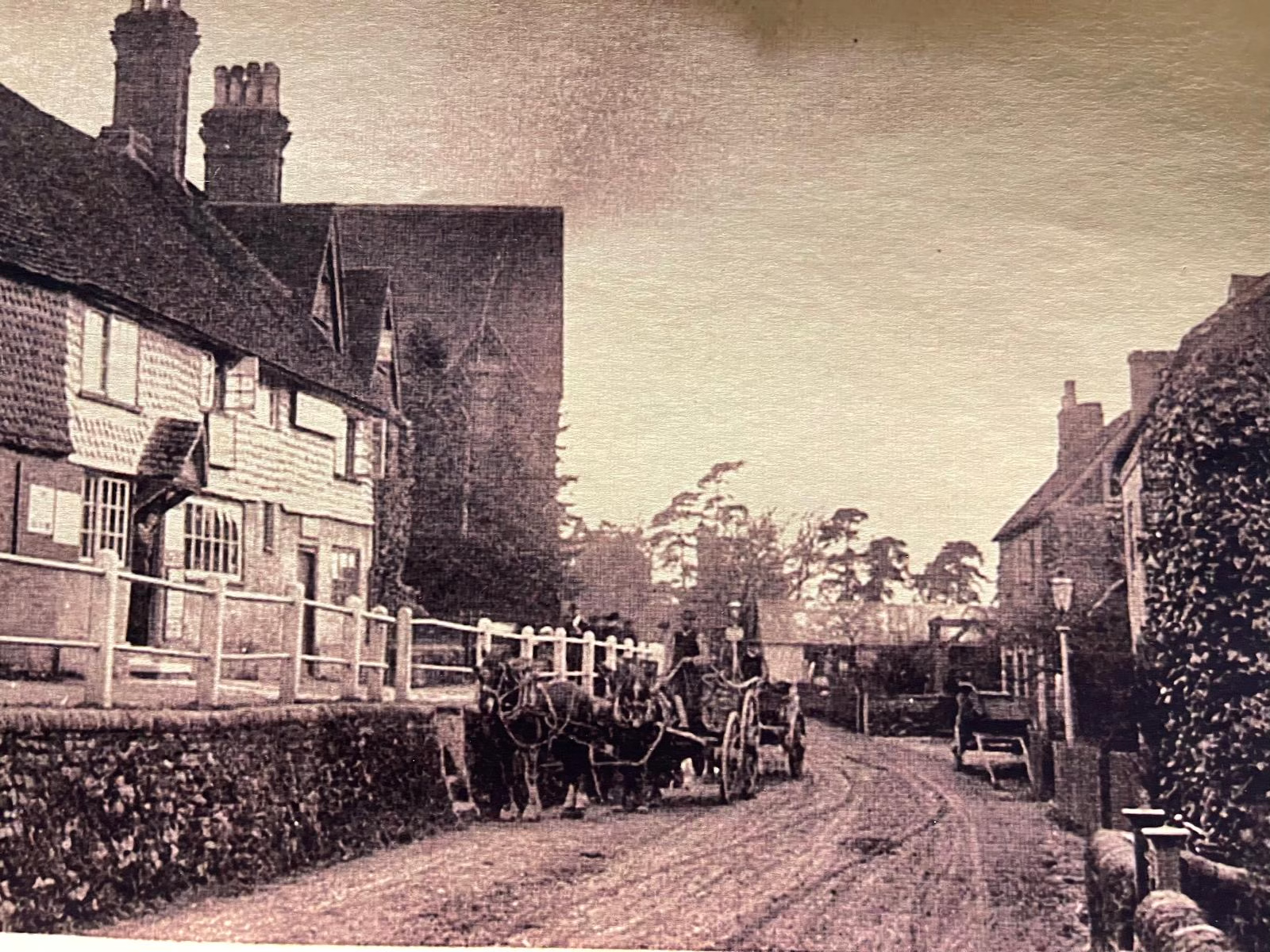
Robert’s house is what later became known as the Anchor Cottage.
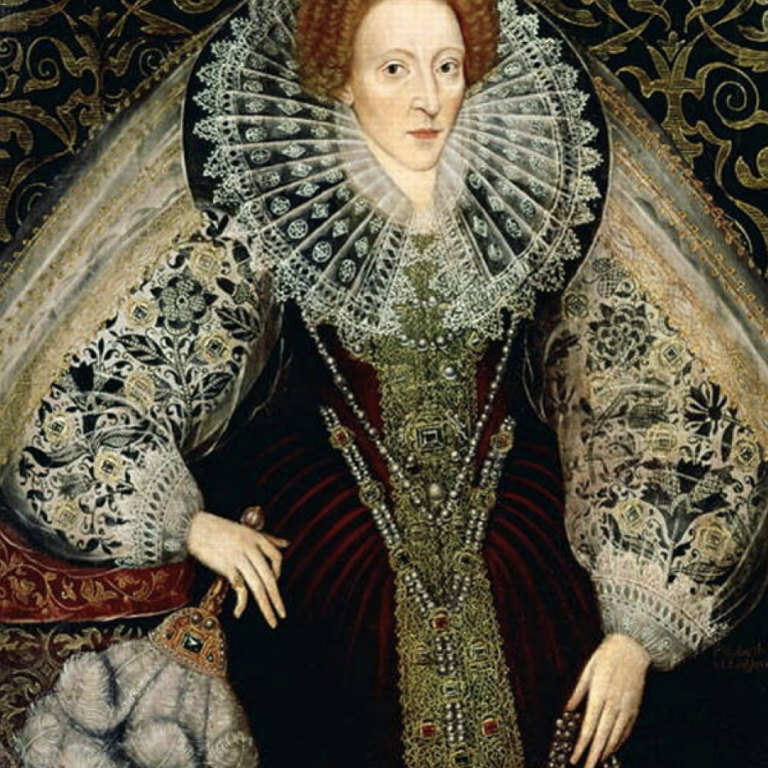
Queen Elizabeth I
Queen Elizabeth reigned from 1558 to 1603. in 1584 she authorised representation by two members of parliament - 'burgesses'; and granted to Haslemere the right to organise an annual fair .
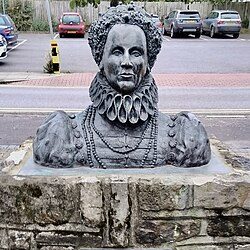
Haslemere's Charter
This bust of the Queen commemorates the granting of the Charter, which conferred significant economic value on the town.
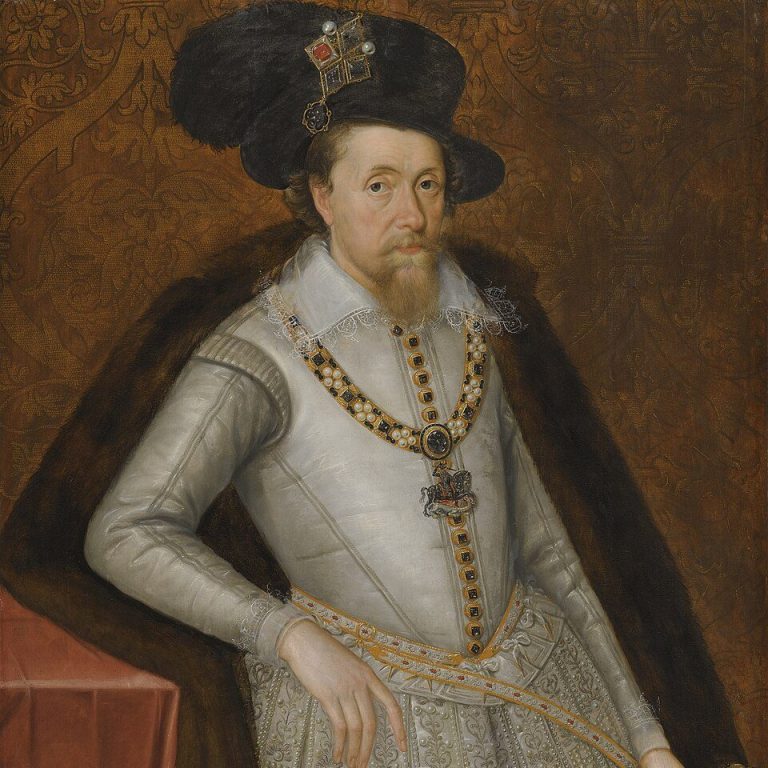
King James 1st
King James 1st was on the throne when Anchor Cottage was built. And the English Civil War was around 30 years in the future.
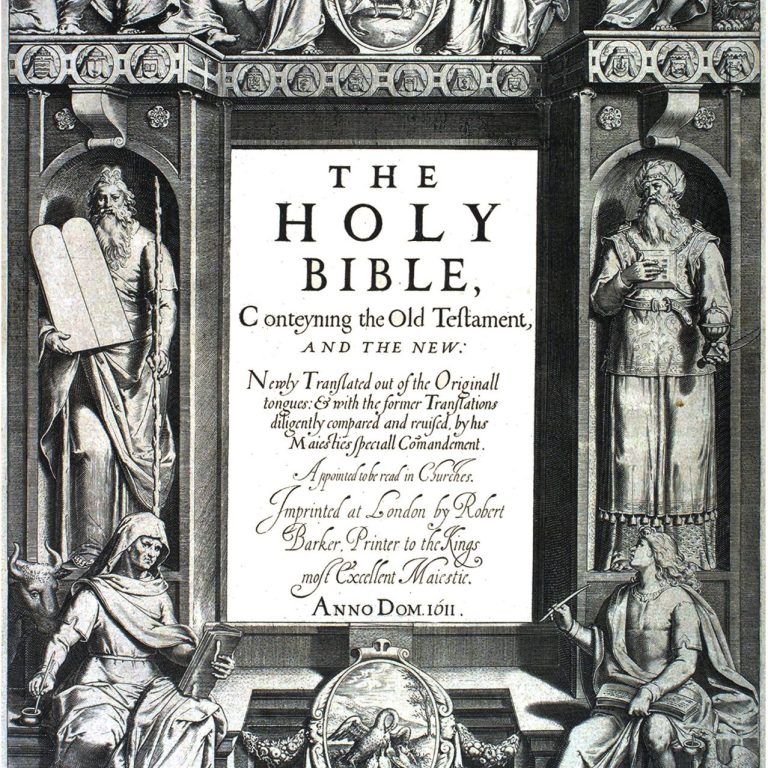
King James Bible
The King James Bible was first published in the same year, 1611. It became the Authorized Version of the Church of England, the standardised version of the scripture for centuries.
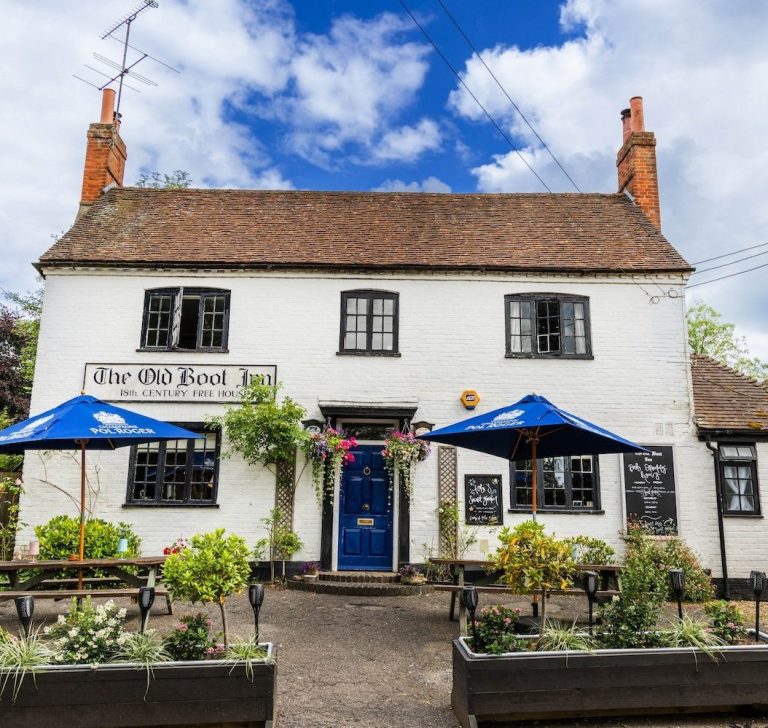
Anchor Inn
In the mid-eighteenth century, Haslemere was a small but strategically placed market town. Its fortunes were closely tied to the busy London - Portsmouth road, a vital artery for trade, coaching, and naval movement between the capital and England’s principal dockyard, and home of the Royal Navy.
By the 1740s traffic along this route was increasing as turnpike trusts improved the highways, making travel faster and more reliable. Coaching inns and roadside taverns multiplied to meet the needs of merchants, farmers, and above all the flow of sailors and officers heading to and from Portsmouth.
Haslemere lay just off the main Portsmouth Road via Hindhead — a stretch notorious for steep climbs and highwaymen. Inns in towns like Haslemere offered safer overnight stops than isolated roadside taverns. It was in this climate that the Anchor Inn first emerged.
The choice of name would have been deliberate: the anchor was one of the most common and reassuring inn signs of the age, symbolising safe harbour for travellers, hope in Christian iconography, and a ready welcome for seafarers.
The Old Boot Inn in Stanford Dingley, a contemporary, brings to life how Anchor Inn might have looked.
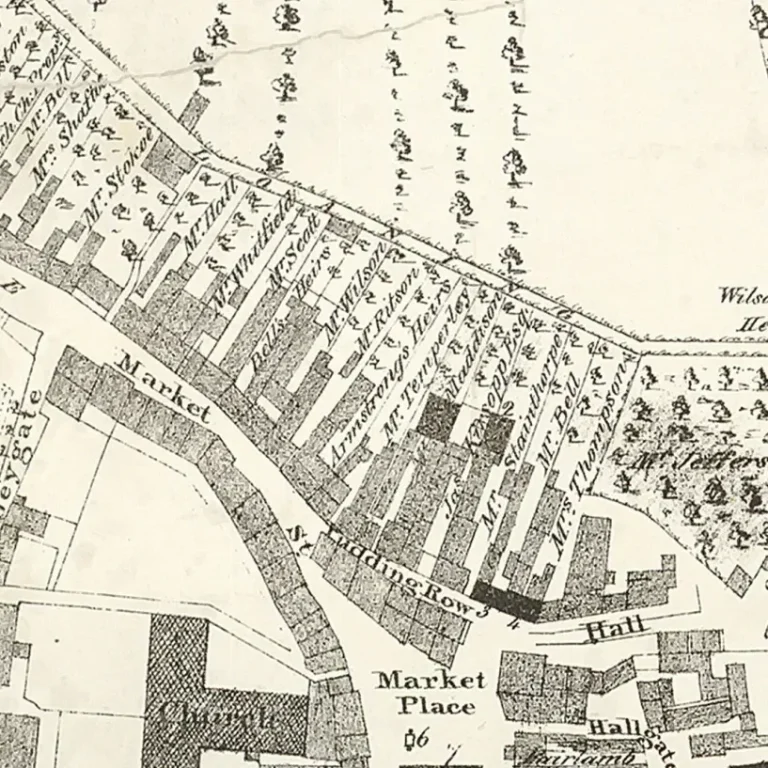
Morley's map of 1735
William Morley’s 1735 map of Haslemere is one of the earliest surviving detailed surveys of the town.
It records individual plots, houses, and property boundaries, together with the names of owners and occupiers, offering a vivid snapshot of Haslemere’s layout in the early eighteenth century.
Beyond its topographical value, the map has political importance: Haslemere was a “burgage borough,” where parliamentary votes were tied to property ownership.
Morley’s survey therefore served both practical and electoral purposes, underpinning disputes over freeholds and voting rights.
Today it remains a crucial document for understanding Haslemere’s social, political, and urban history.
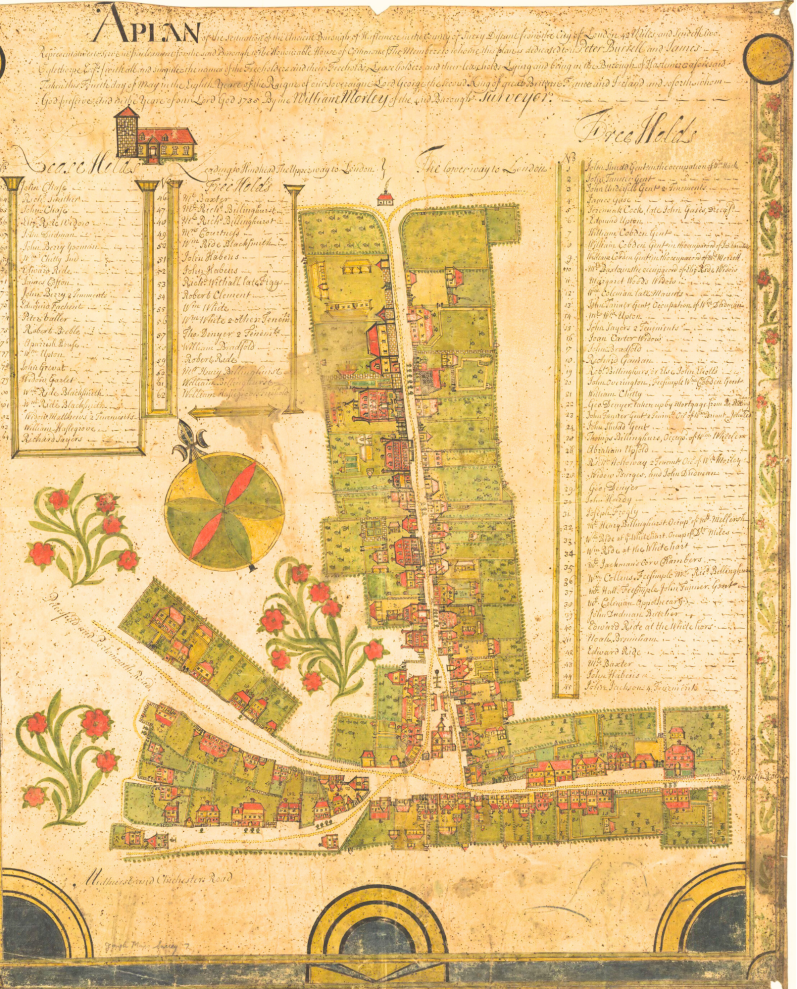
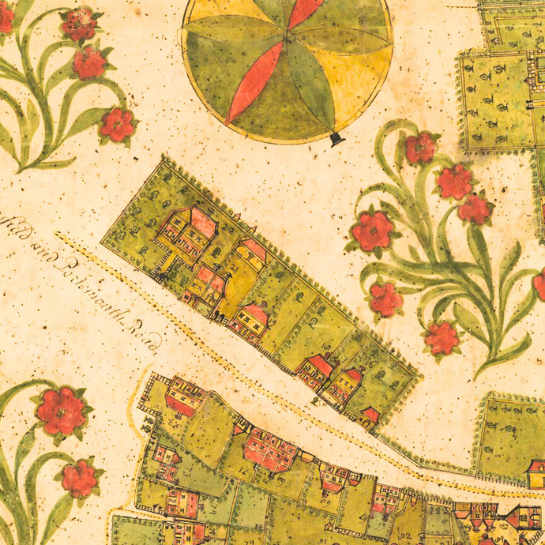
Anchor Cottage is number 21 on Morley's map.
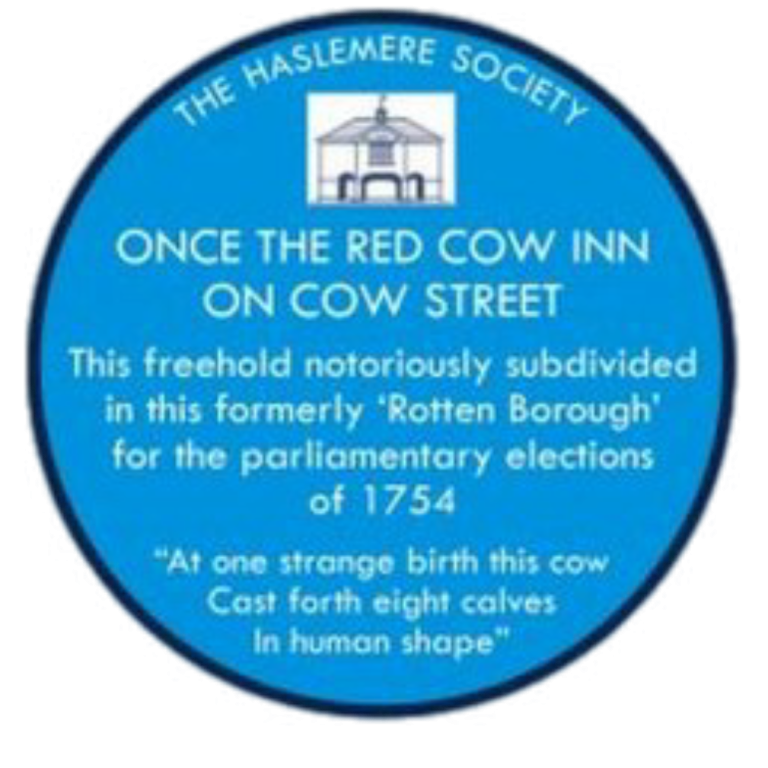
Vote rigging in the 1700's
As a so-called burgage borough, Parliamentary representation depended not on the number of people living in the town, but on the ownership of a fixed set of ancient freehold properties known as burgage plots.
This system meant that whoever acquired enough of these properties could effectively control the borough’s elections, regardless of the size of the population or the wishes of its inhabitants. Haslemere, with fewer than a hundred enfranchised plots, became a classic “pocket borough” where local influence was concentrated in the hands of a few landowners.
Philip Carteret Webb, a barrister, antiquarian and government lawyer, became Member of Parliament for Haslemere in the mid-eighteenth century.
To secure his hold on the borough, Webb systematically purchased freeholds and tenements, sometimes dividing them to multiply the number of votes - infamously, in the case of The Red Cow. In 1762 he added Anchor Inn to his portfolio.
Ownership of Anchor Inn, an early and prominent freehold property, gave Webb a visible presence in the town and reinforced his claim to be a rooted local figure.
A plaque on the wall of the building that was once the Red Cow, whose freehold was divided into eight, to multiply the voting rights of the owner.
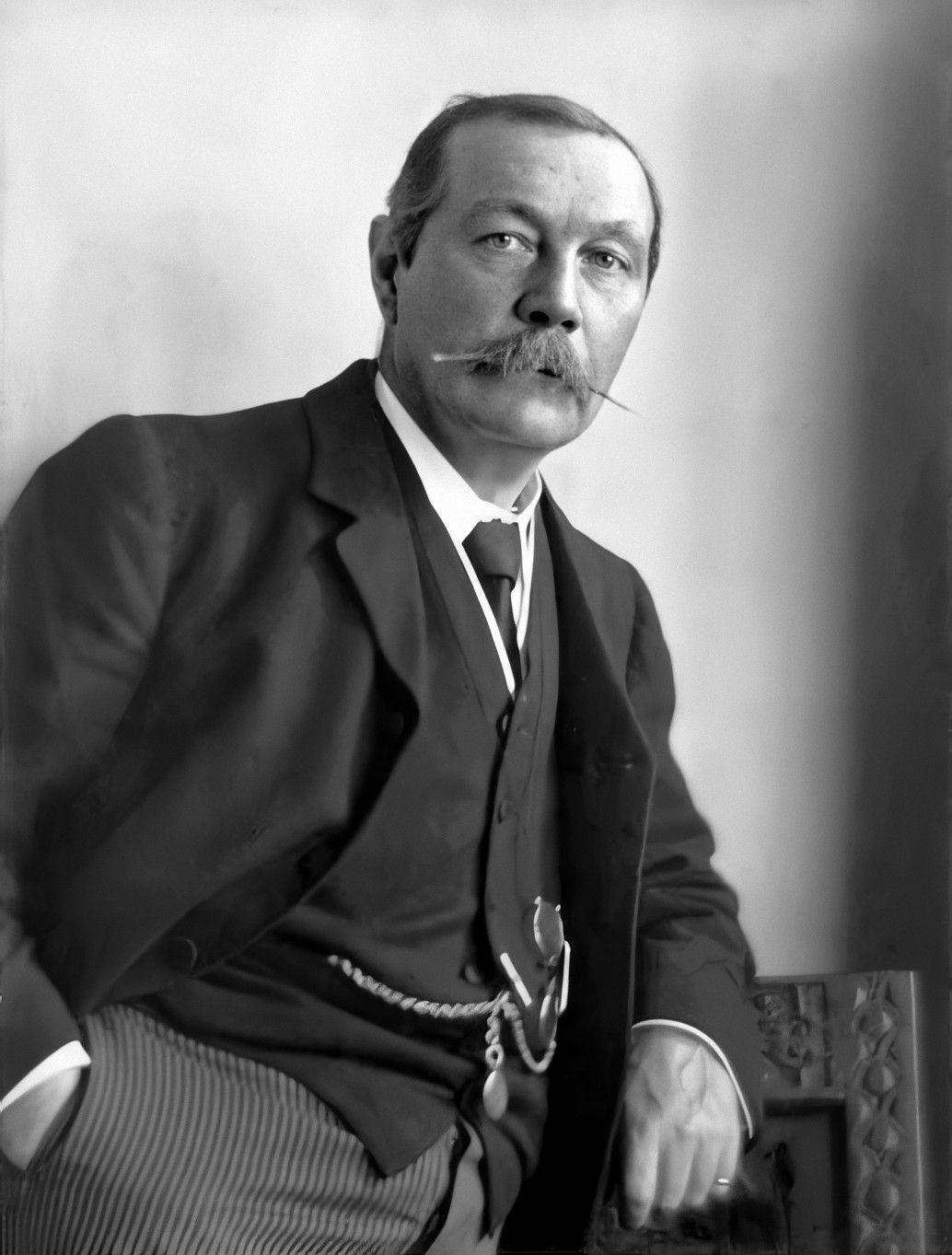
Sir Arthur Conan Doyle
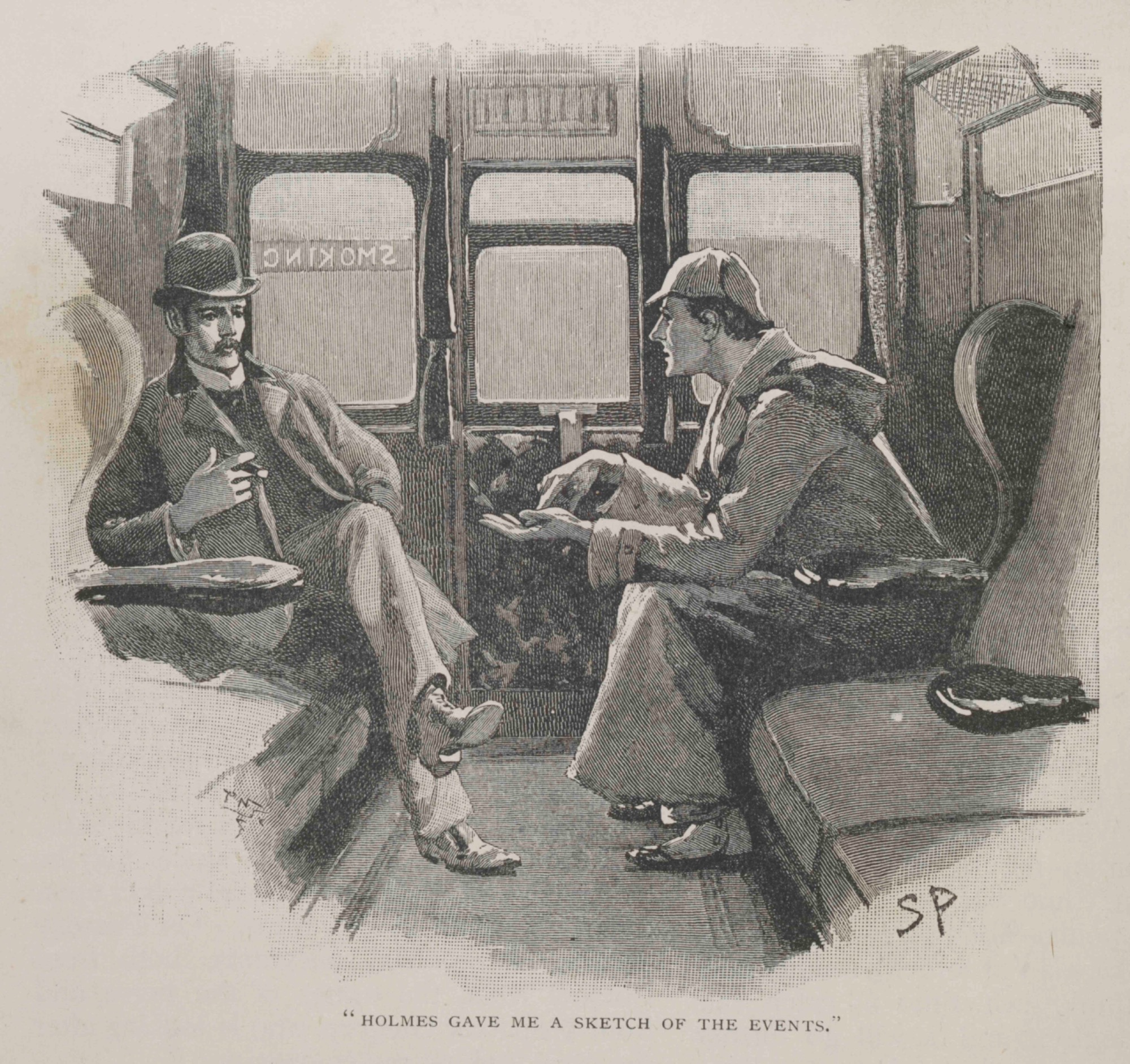
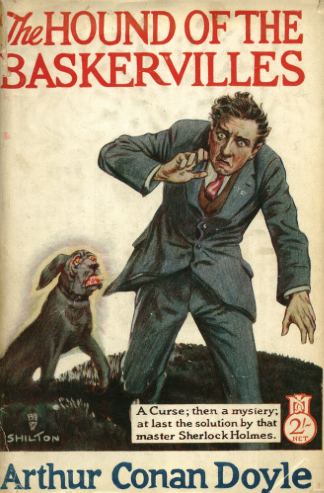
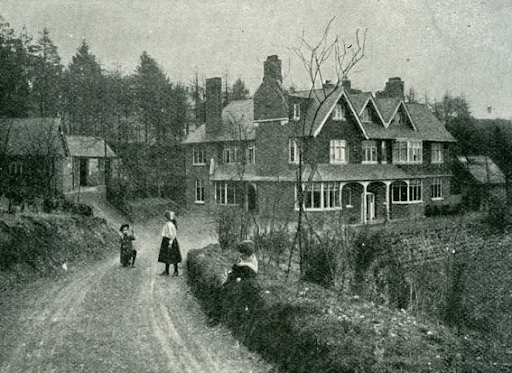
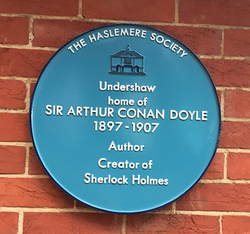
The creator of Sherlock Holmes, Sir Arthur Conan Doyle, lived at Undershaw in Hindhead, Haslemere, from 1897 to 1907 and wrote one of Holmes' most enduringly popular adventures, The Hound of the Baskervilles, while there.
The Adventure of the Solitary Cyclist is set in an unspecified location near Farnham - but Doyle sadly never brought his famous creation any closer to home.
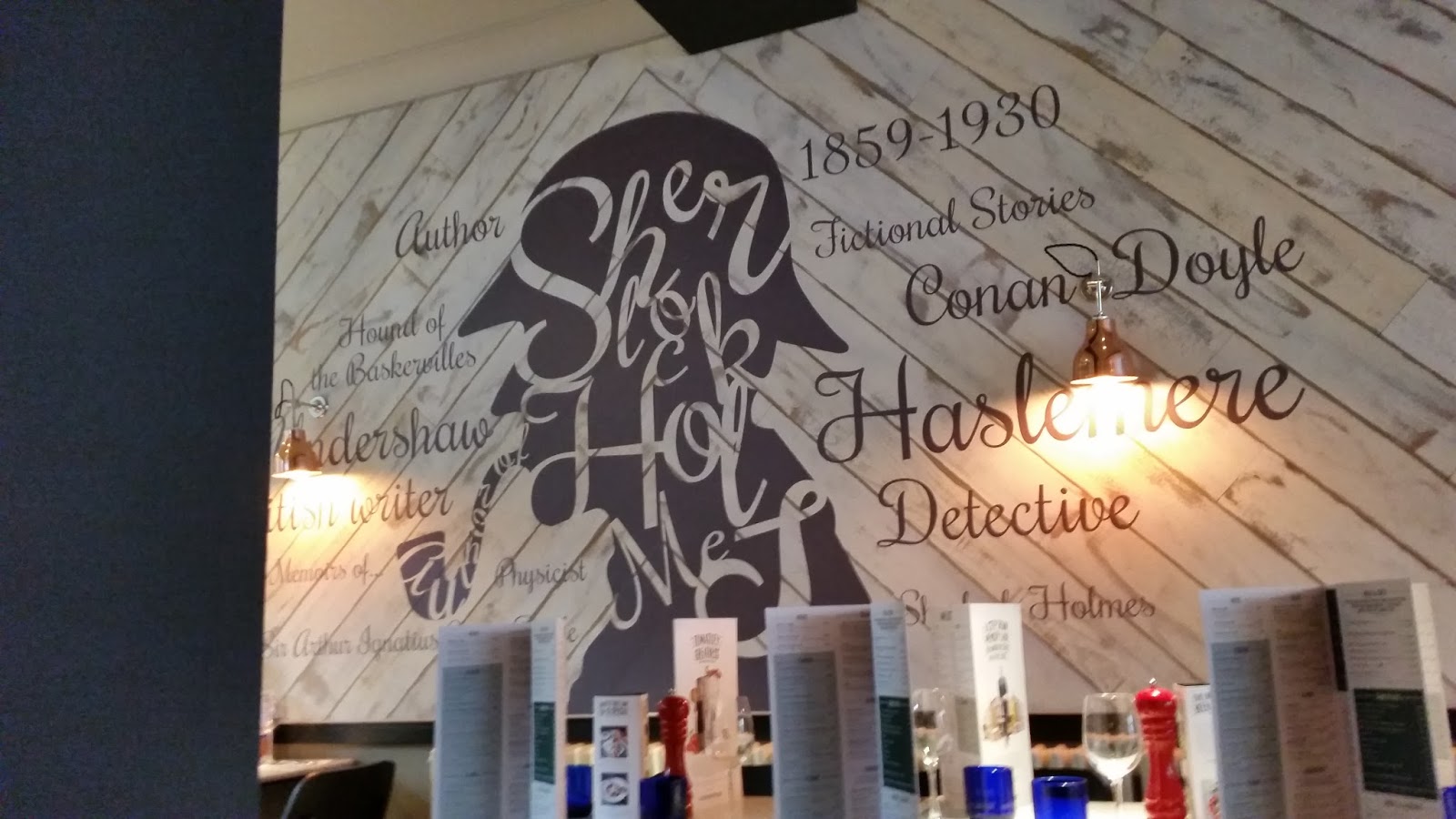
Haslemere Pizza Express now honours the Doyle connection and the world-famous detective.
Haslemere Arts and Crafts
Haslemere has long been a place where art, nature, and community meet. At the turn of the 20th century it became a haven for the Arts and Crafts movement, which sought to bring beauty and integrity back into everyday life.
Drawn by the town’s gentle hills and timeless character, artists and reformers saw Haslemere as the perfect setting to revive traditional skills and create a way of living that felt closer to nature.
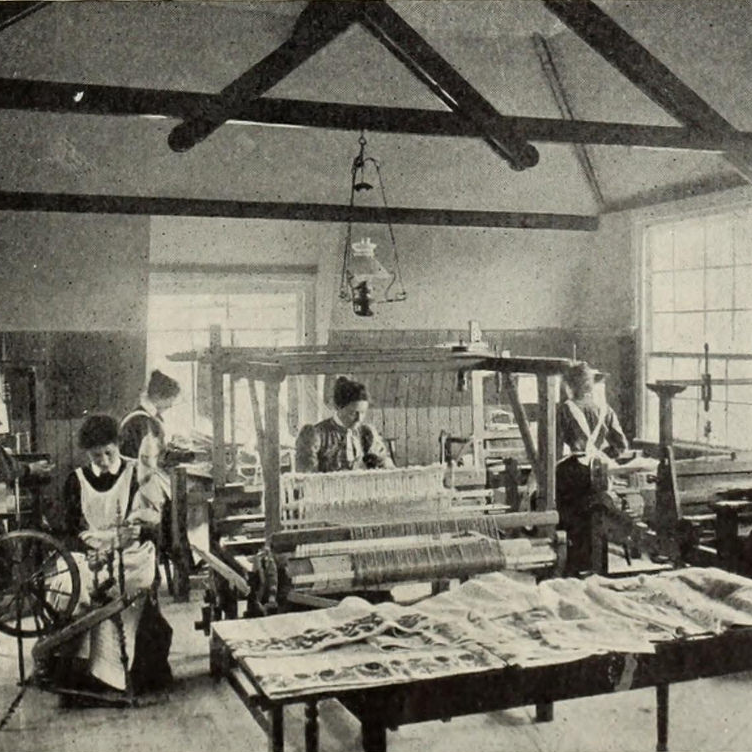
Craft guilds, weaving workshops, and woodcarvers flourished here, guided by the belief that the objects surrounding us should be not only useful but also uplifting.
Figures such as Charles Robert Ashbee and Godfrey Blount helped weave Haslemere into the fabric of this wider movement, encouraging design rooted in honesty, simplicity, and respect for materials. Their influence is still visible today in the handmade details of local houses, the warm solidity of stone and timber, and the sense of harmony between building and landscape.
Haslemere’s streets now remain a quiet echo of that vision.
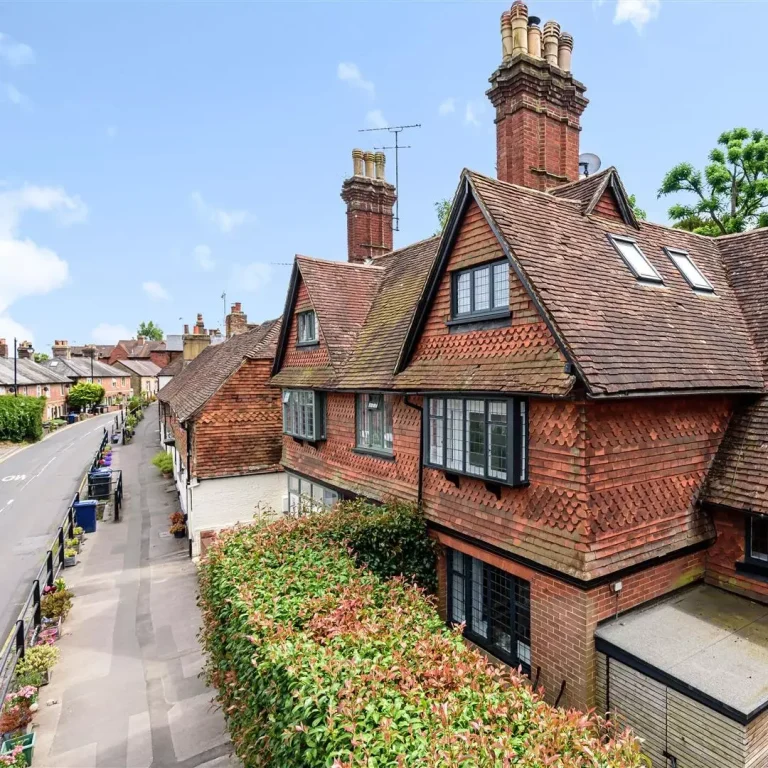
The Arts and Crafts spirit lingers in the care with which the town has preserved its historic centre, in the way homes like Anchor Cottage stand with a kind of quiet dignity, and in the surrounding woods and commons that inspired so many.
Living here is to feel part of a tradition that values craftsmanship, beauty, and community — the same ideals that made Haslemere such a beacon for the Arts and Crafts pioneers more than a century ago.